
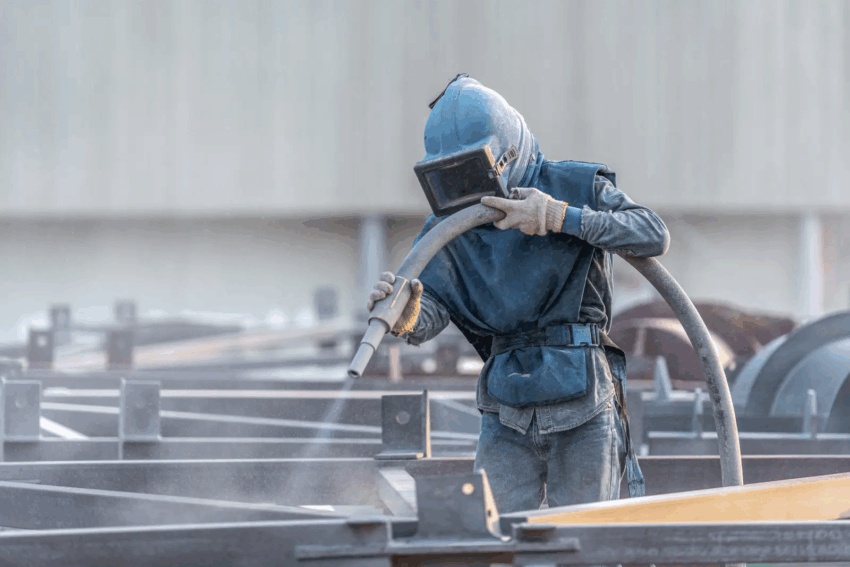
When it comes to preparing surfaces for painting, coating, or finishing, sandblasting is one of the most effective methods available. It involves using a machine to shoot tiny particles, usually sand or similar materials, at high speed onto the surface.
This process helps remove old paint, rust, dirt, and other unwanted materials. Many industries, including construction, automotive, and manufacturing, rely on sandblasting to get surfaces ready for the next step. The results are often cleaner, smoother, and better prepared for whatever coating comes next.
Removes Rust and Old Coatings Effectively
One of the biggest problems with metal surfaces is rust. It not only looks bad but also weakens the metal over time. Sandblasting helps solve this by completely removing rust and any old paint or coating that is stuck to the surface.
This makes the metal look fresh and clean again. When workers apply new paint or a protective coating after sandblasting, it sticks much better and lasts longer because the surface underneath is clean and smooth.
Prepares Surfaces for Better Adhesion
Before applying a new layer of paint, coating, or sealant, the surface needs to be ready to hold onto it. Sandblasting creates a rough texture that helps the new material stick better. A surface that has been sandblasted gives the paint or coating something to grip, which means the final finish is more durable and looks more even.
Without proper preparation, coatings may peel, crack, or wear off quickly. Sandblasting prevents that by giving the surface the right texture from the beginning.
Saves Time Compared to Manual Cleaning
Cleaning the surface by hand can take a lot of time, especially if the surface is large or has thick layers of dirt or paint. Sandblasting speeds up the process because it can clean large areas quickly and completely.
Workers do not need to scrape, sand, or scrub for hours. This means projects can move faster and finish on time. In businesses where time is money, sandblasting can make a big difference in how fast and smoothly a job gets done.
Works on Different Materials and Shapes
Sandblasting is a flexible method that works well on many types of surfaces, such as metal, brick, wood, and concrete. It can also handle surfaces with odd shapes, curves, or hard-to-reach areas.
This makes it useful for many different projects, from cleaning old brick walls to preparing car parts or industrial equipment. Because sandblasting can be adjusted depending on the type of surface, it’s a safe and reliable choice in many industries.
Environmentally Friendly When Done Correctly
When companies use proper equipment and follow safety rules, sandblasting can be an eco-friendlier way to clean surfaces. Some systems use recycled materials instead of fresh sand, and special machines can collect and reuse the blasting media.
This reduces waste and keeps harmful dust out of the air. It also helps companies meet environmental guidelines while still getting great results.
Conclusion
Sandblasting offers many clear benefits for surface preparation. It removes rust and old coatings, improves how well new layers stick, saves time, and works on different materials. When done with care, it can also help protect the environment. Because of these reasons, sandblasting remains a smart and effective choice for anyone needing clean, ready-to-use surfaces before starting a project.